What The Amazing Digital Circus Finale Says About Modern Audiences
The controversy surrounding The Amazing Digital Circus finale highlights a growing problem in modern media. As audiences become increasingly attached to their favorite franchises, expectations and personal investment can begin to overshadow the work itself.
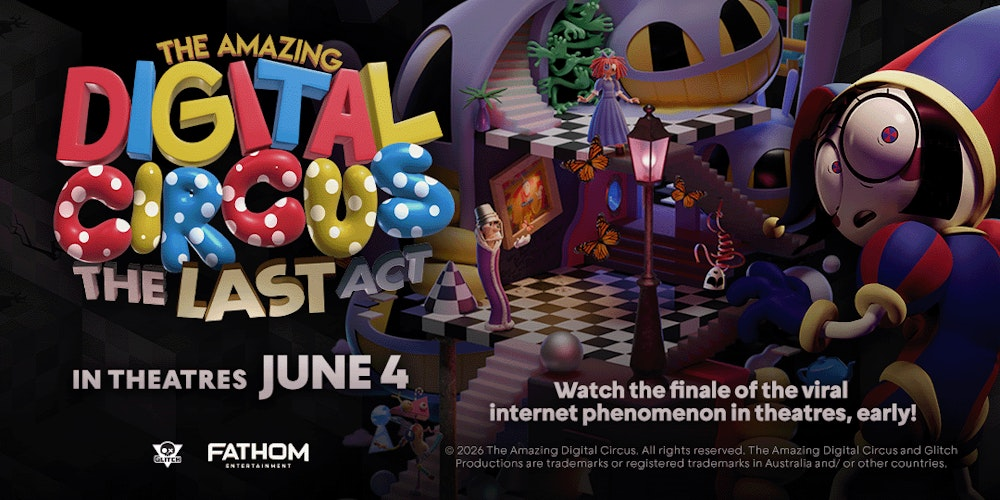
This week, the widely acclaimed web series The Amazing Digital Circus (TADC) by Gooseworx comes to a close after almost three years of captivating young and adult audiences with its unique design and story telling.
For the release of the last episode, Glitch Productions decided to air The Last Act in theatres, two weeks before the free online release, to give dedicated fans an opportunity to both support the series one last time and to watch it on the big screen alongside the rest of the fanbase.
Before the episode got its time to shine on cinemas around the world, the entire production was thrown into online controversy once the last episode got leaked online, leading to a lot of discourse not only surrounding the story itself, but how the creator reacted to the episode being leaked online.
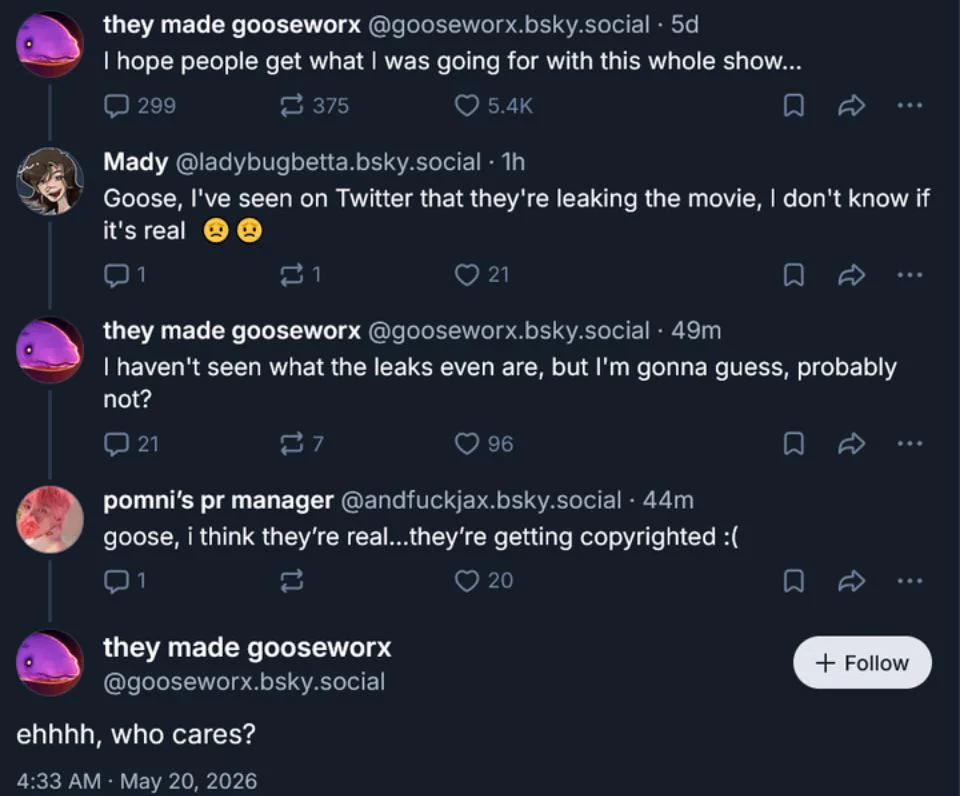
The entire interaction generated a slew of drama hit pieces complaining about the behaviour of the creator, personal attacks and overall outrage which shine a light on the big problem that has been growing with modern audiences in every type of media.
Despite TADC being more prone to attracting an audience of a younger age which is prone to a more passionate and emotion driven behaviour, it seems to me that nowadays there is a growing trend of entitlement when it comes to IP's that have a very communicative production team or a very strong online presence.
As someone who only watched the entirety of the show near the date of its ending it was apparent to me how much people liked it by the fact that a bunch of people online, over the years of it's release, have made the show their entire personality, creating an unhealthy relationship with the show and the story overall.
This unhealthy obsession with the show also had a big reflection on the reception of The Last Act.
Over the years of it's showing, fans of TADC created countless theories and speculative pieces on how the show was going to end, completely ignoring the story purposes and direction that had clearly been outlined since the beginning.
This is a problem that happens in both media that takes a long time to release and media that has a disproportionate fanbase compared to the workload that is being put into it.
When you get a very convoluted and interesting story and let it bubble up in a pot over a few years, no matter what you put out in the end, a lot of people are going to be dissapointed if it doesn't fit the head canon they created in their heads.
I think modern audiences are increasingly struggling to separate what they personally want from a piece of media and the quality of the work itself.
There are two immediate comparisons, of both success and failure, that come to mind in this topic
Hollow Knight: Silksong
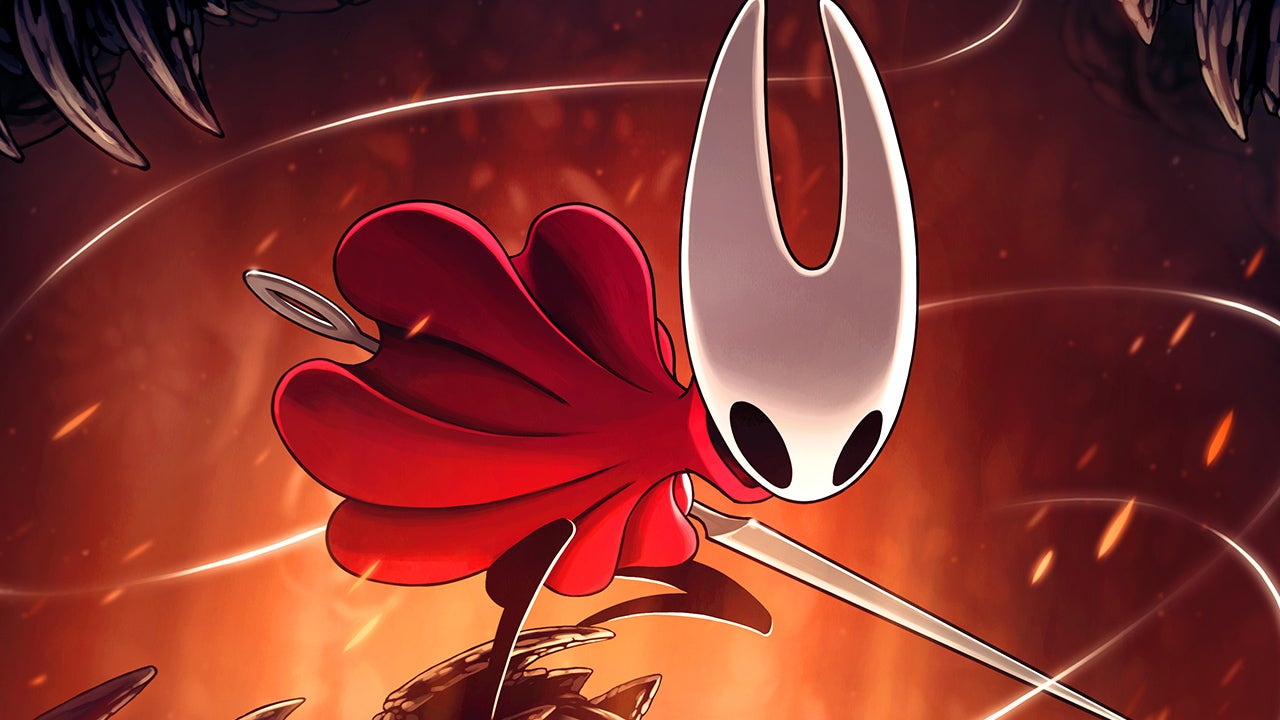
Silksong is an interesting one, probably the longest time a franchise has been put on hold and still managed to succeed after years of fan theories and burnout from the long waiting period.
It is my opinion that one of the reasons Silksong avoided a larger backlash may have been because the creators, during the period in which the game was being developed, didn't feed into unrealistic expectations from the fanbase that could create a disproportionate outrage if certain criterias weren't met by the date of it's release.
Silksong is an unusual and interesting example because the developers didn't take a strong stance against the rabid fanbase, instead, the lack of response and attention to expectation actually let emotions simmer down a little bit, resulting in a much more calm and proportionate reaction at the time of its release.
Star Wars: The Mandalorian & Grogu
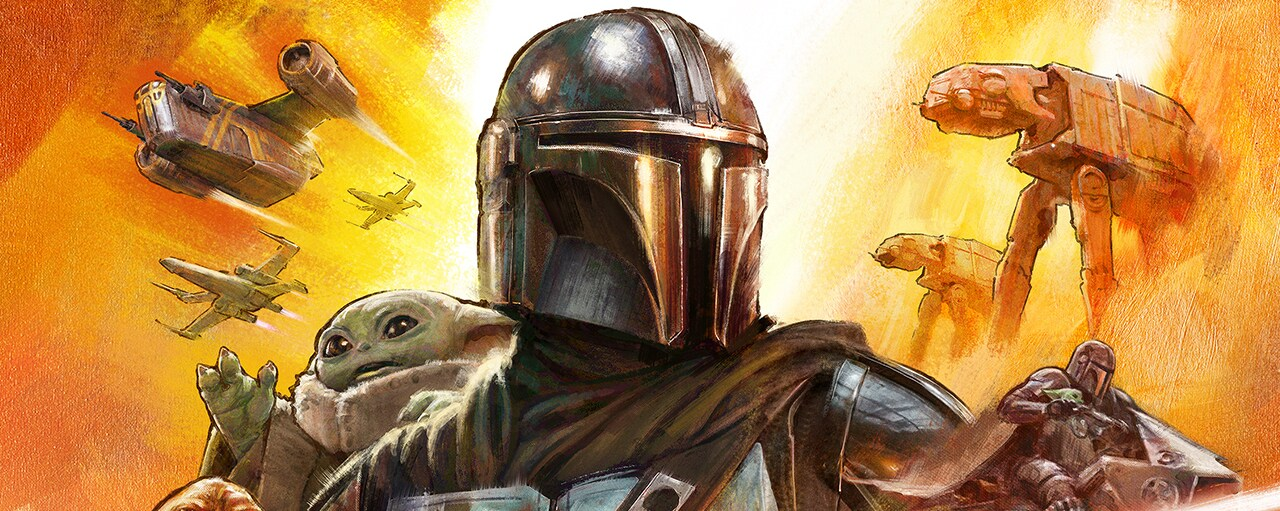
Star Wars the Mandalorian & Grogu is quite the opposite of the approach Silksong took.
The movie was heavily marketed before release and Star Wars fanbase, acting in accordance to how they always did, managed to get mad over a movie that was, to a certain degree, all it was intended to be.
I think this example fits well into the entire TADC topic because Star Wars, being such a huge franchise, somehow manages to find its way to the same problems.
Theories and expectations of how the movie was going to have heavy implications on the franchise as a whole, resulted in a big portion of the fanbase, who was expecting it to be something it never aimed to be, leaving the entire experience with a sour taste for the entire franchise.
The movie delivered on the goals it appeared to have, but the expectations from the fanbase, made it so the movie was heavily critiqued in a non subjective way.
Final considerations
What I'm trying to get to with this article is that there is a growing problem where art in general is starting to be evaluated as an attachement to ones life instead of a standalone piece that is supposed to be appreciated on a subjecitve scope.
More and more, for reasons I cannot understand, people are tying their lives and self worth into different IP's and getting frustrated when their view of the product doesn't align with the person who designed it in the first place.
All of this is hurtful not only for the people who are making art and entertainment but also for the collective and global media literacy which is becoming lower and lower as time passes and hurting the overall discussion around the respective industries.
In a way, I think this is one of the reasons why we still need outlets that promote the subjectivity of review and interpretation of media, so that the people who are making the products for us can be more inclined to produce without the overbearing pressure of the online space.